Nanoparticles
Gold Nanoparticles
Gold Nanoparticles 40 nm
Citrate stabilized gold nanoparticles for conjugation, assay development, and biosensing.
Catalog No
NDX-AU40
Pack
Compare products with technical highlights, document cues, and product details.
Uniform nanosilver colloid for antimicrobial testing and conjugation feasibility work.
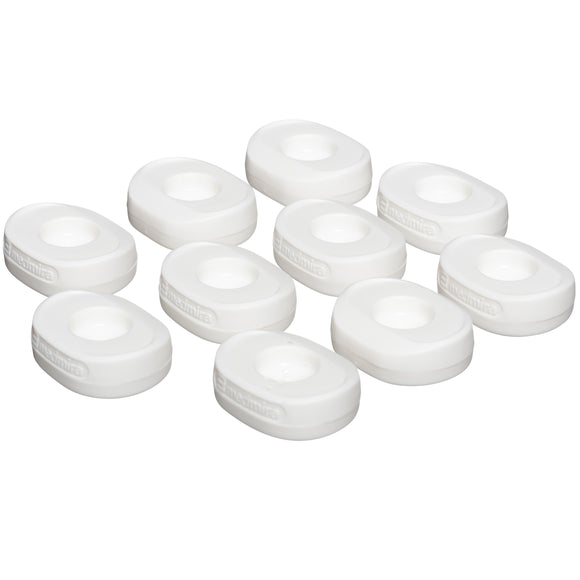
Kit Components 10 Miriad™ test cartridges / 50 Miriad™ test cartridges 12 ml of universal buffer / 60 ml of universal buffer Detailed product guide To detect antibodies using this toolkit the selected antigen(s) can be spotted onto the nitrocellulose membrane encapsulated within the specially designed plastic test cartridge. When the sample is applied any antibodies against the immobilized antigens in the sample will form an antigen/antibody immuno-complex, which is detected through the use of a Protein A-, or a Protein G-gold conjugate (not supplied with this kit). The kit is also suitable to detect specific antigen molecules. In this case a pair of antibodies, one for capturing the antigen (spotted onto the membrane as above) and the other for conjugation to gold nanoparticles for detection will be required. When the sample is applied the spotted antibody will capture any target antigen present, which can subsequently be visualized by applying the detection antibody-gold conjugate.
No Gold Nanoparticle Conjugation Kits for diagnostic research and development.
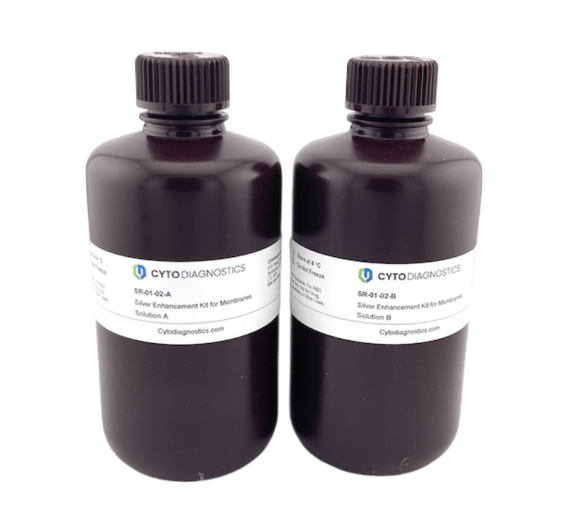
This kit contains: Silver Enhancer Solution A, 250ml Silver Enhancer Solution B, 250ml Quantity of working solution: 500ml (Staining of ~100 membrane strips or 10-20 membranes) Cytodiagnostics silver enhancer kit for membranes is ideal for applications such as Western Blots and dot blot assays, and offers down to picogram level of detection of gold nanoparticle conjugate, silver nanoparticle conjugate or gold nanourchin labeled samples while minimizing background. Amplification of the gold nanoparticle label is a result of deposition of silver on the gold nanoparticles surface during the reaction and increases the sensitivity of gold nanoparticle conjugate labeling up to 100-fold. This allows for detection of scarce targets.
Antibody Type: Primary Antibody Host: Mouse Specificity/Target: 6xHIS tag Quantity: 0.1mg Clonality: Monoclonal Formulation: Liquid, Supplied in phosphate buffered saline (PBS), pH 7.2 Intended use: It can be used as a detection or capture antibody in a variety of immunoassays, such as WB, ELISA and IHC. Nanoparticle Conjugates can be developed by passive adsorption or covalent conjugation of antibodies to the nanoparticle surface. The resulting conjugate can be used in applications such as blotting, electron microscopy, lateral flow and immunohistochemistry. Properties This antibody reacts with 6xHIS as determined by ELISA and western blot. Optimal working dilutions should be determined experimentally by the investigator. Storage Antibody should be stored between 2ºC and 8ºC for up to 14 days. For long-term storage, aliquot and store between -20ºC and -80ºC. Multiple freeze-thaw cycles are not recommended. When stored as specified the product is stable for at least 12 months.
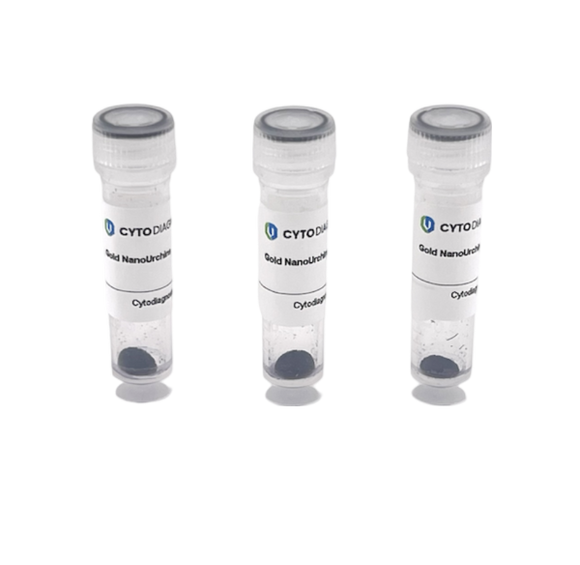
Intended use: Affinity Purified Rabbit anti-Goat IgG h+l antibody is suitable for WB, ELISA, IHC and is commonly used by manufacturers of lateral flow immunochromatographic assays. Nanoparticle Conjugates can be developed by passive adsorption or covalent conjugation of antibodies to the nanoparticle surface. The resulting conjugate can be used in applications such as blotting, electron microscopy, lateral flow and immunohistochemistry. Properties This antibody will react with goat IgG and with light chains common with other goat immunoglobulins as determined by ELISA and IEP techniques. It is suitable for blotting, ELISA, IHC and Lateral Flow applications. This antibody may cross-react with IgG from other species. Storage Store product at 2-8°C. Do NOT freeze. When stored as specified the product is stable for at least 24 months.
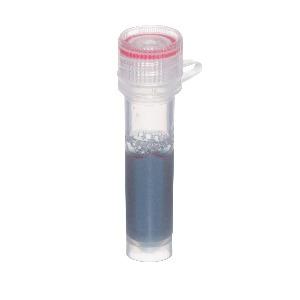
Antibody Type: Primary Antibody Host: Mouse Specificity/Target: Fluorescein Isothiocyanate (FITC) Quantity: 1.0 mg Clonality: Monoclonal Formulation: Liquid, Supplied in phosphate buffered saline (PBS), pH 7.2 Intended use: This purified Mouse anti-Fluorescein Isothiocyanate can be used in ELISA to detect FITC conjugated proteins. Nanoparticle Conjugates can be developed by passive adsorption or covalent conjugation of antibodies to the nanoparticle surface. The resulting conjugate can be used in applications such as blotting, electron microscopy, lateral flow and immunohistochemistry. Properties This antibody reacts with FITC as determined by ELISA and western blotting. Optimal working dilutions should be determined experimentally by the investigator. Storage Antibody should be stored between 2ºC and 8ºC for up to 14 days. For long-term storage, aliquot and store between -20ºC and -80ºC. Multiple freeze-thaw cycles are not recommended. When stored as specified the product is stable for at least 12 months.
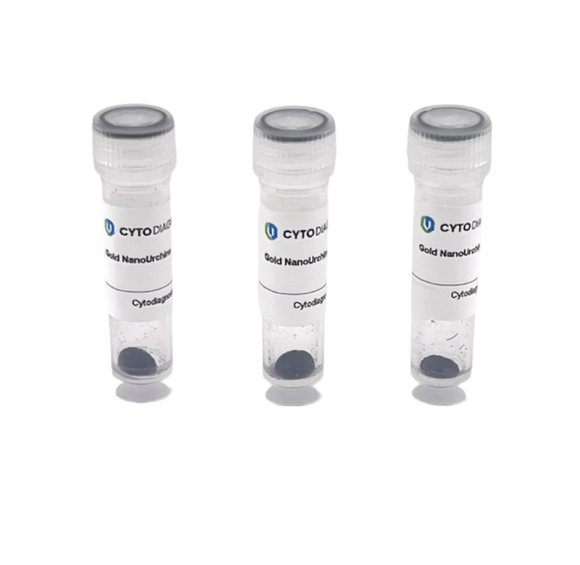
Antibody Type: Primary Antibody Type: Unconjugated Host: Mouse Specificity/Target: CD44 (Pgp-1) Size: 250ug Concentration: 1mg/ml Clonality: Monoclonal Formulation: Lyophilized, Purified IgG buffered in PBS and 0.02% NaN3. (Purified from ascitic fluid via Protein G Chromatography). For maximum recovery of contents, spin down tube before use. Intended use: It can be used as a detection or capture antibody in a variety of immunoassays, such as Flow Cytometry, Immunoprecipitation, Cryostat Sections, Paraffin-Embedded Sections, Functional Assay. Nanoparticle Conjugates can be developed by passive adsorption or covalent conjugation of antibodies to the nanoparticle surface. The resulting conjugate can be used in applications such as blotting, electron microscopy, lateral flow and immunohistochemistry. Properties anti-rat CD44 (OX-49) monoclonal antibody recognizes rat CD44 (Pgp-1), also called CD44H. This antigen is expressed on most leukocytes (except a sub population of B cells) and increases upon activation. The OX-49 antibody binds extracellularly to the standard (S) form on rat leukocytes, but it is not known if they bind to the N-terminal region. It has also been reported that the antibody may bind to melanoma cell lines that express CD44V (splice variant form) Store product at 4°C. Do NOT freeze. Aliquot and freeze unused portions for long term storage. Avoid freeze/thaw cycles. When stored as specified the product is stable for at least 12 months.
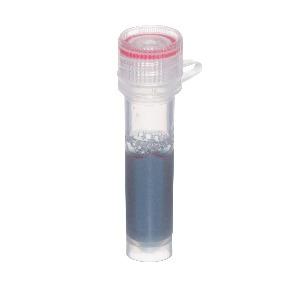
Antibody Type: Primary Antibody Type: Unconjugated Host: Mouse Specificity/Target: CD8a Quantity: 0.250ug Clonality: Monoclonal Formulation: Liquid, Supplied in phosphate buffered saline (PBS) Intended use: It can be used as a detection or capture antibody in a variety of immunoassays, such as WB, ELISA and IHC, FC, IP. Nanoparticle Conjugates can be developed by passive adsorption or covalent conjugation of antibodies to the nanoparticle surface. The resulting conjugate can be used in applications such as blotting, electron microscopy, lateral flow and immunohistochemistry. Properties anti-rat T cytotoxic/suppressor cell monoclonal antibody recognizes a determinant on the majority of thymocytes (90-95%), a subset of peripheral T cells, the majority of NK cells, and the granular intraepithelial leukocytes in the small intestine. The antigen recognized is a complex of surface glycoproteins of Mr 34, 39, and 76 kDa and is the rat homologue of the human CD8 and the mouse Ly 2.3 antigen. Storage Antibody should be stored at 4ºC. Do Not Freeze. For long term storage, aliquot and freeze unused portions at -20ºC in volumes appropriate for single usage. Avoid repeated freeze thaw cycles. When stored as specified the product is stable for at least 12 months.